By Vedanth Srinivasan, Head of Solutions, Engineering & Design Cross & Emerging Industries (CEI) – AWS
By Or Israel, CEO and Co-Founder – bananaz
Mechanical engineering is one of the highest-value domains where AI should be delivering transformative results, and yet it is also one of the hardest to get right. One of the largest barriers to adoption is context. Generic AI tools sit outside the systems where engineering work actually happens. They are disconnected from CAD files, PLM revision history, BOMs, and the company-specific rules that define whether a part is manufacturable. Without that context, generic AI produces plausible suggestions for problems it does not actually understand. Closing that gap requires more than another copilot bolted onto the side of CAD. It requires an agentic layer that lives inside the existing engineering stack, orchestrating specialized AI agents to read native CAD and PDM data, reason about it, and act on it the way a senior engineer would, taking on the heavy lifting of analyzing design files, running DFM checks, generating reports, validating against company standards, surfacing issues before they reach production, creating revisions, or even rolling back changes.
The financial and logistical stakes make this gap impossible to ignore. Research published in Quality Magazine, along with engineering change management studies cited across the industry, shows that design modifications caught late in development can cost up to 100 times more than the same changes addressed in early design. Once tooling, certification, and supplier commitments are locked in, small oversights become multi-million-dollar setbacks and reputational damage. At the same time, recent research from the Manufacturers Alliance found that 47% of manufacturers cite data fragmentation as a major obstacle to implementing AI effectively, with critical design and engineering information scattered across CAD systems, PLM platforms, and disconnected documentation. Mechanical engineering teams feel both pressures at once. They need AI to catch costly design issues early, and they need AI to natively sync with their data, their workflows, and their actual standards.
This is the gap bananaz is built to close. bananaz operates as an agentic layer that runs natively inside the workflows mechanical engineers already use, integrating directly with leading PDM and PLM systems and CAD environments rather than sitting alongside them. What makes this possible is a proprietary, LLM-readable representation of engineering data that bananaz developed specifically for this domain. CAD geometry, drawing annotations, assembly hierarchies, BOM metadata, and PDM revision history are translated into a structured format that AI agents can reason over reliably, producing consistent, repeatable results rather than the variability LLMs are known for. On top of that foundation, bananaz ingests each organization's design standards, manufacturing rules, and tribal knowledge, so its analysis reflects how that specific team actually works. The result is AI that understands engineering intent, takes action on real design data, and surfaces risks early enough to act on them, shifting when problems get caught upstream, where fixes are cheap.
In this post, we'll share how bananaz's AI-powered platform hosted on Amazon Web Services (AWS) provides a transformative solution that supercharges mechanical engineering teams to accelerate R&D, eliminate design errors, ensure compliance, and bring products to market with unprecedented speed and confidence.
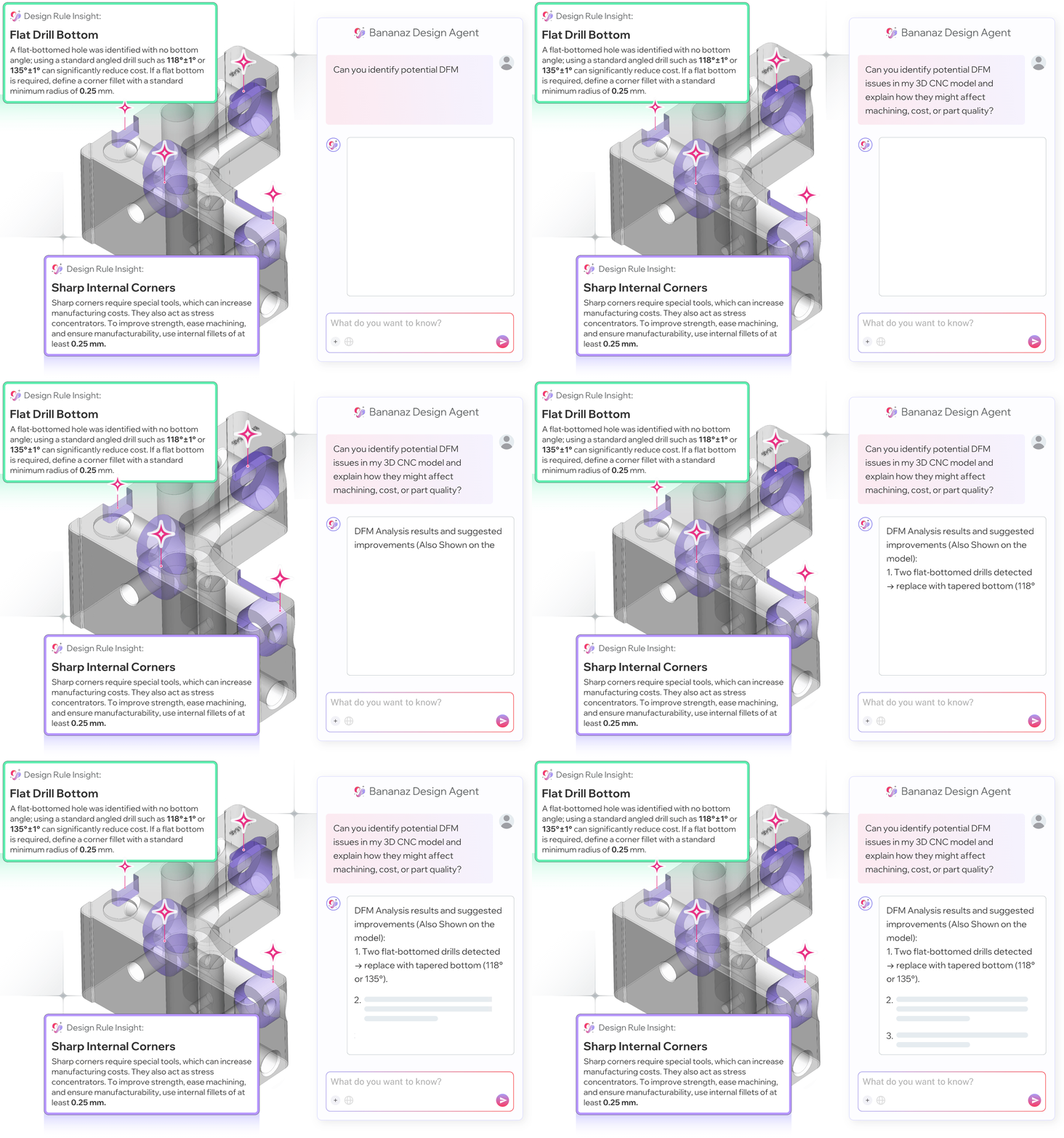
Snapshot of bananaz's AI-Powered Design Intelligence
Modern mechanical engineering workflows require more than traditional CAD tools. Teams need intelligent systems that can proactively analyze designs, surface risks, validate compliance, and coordinate changes across complex product specifications and bill of materials (BOM).
bananaz delivers this through an orchestrated system of specialized AI agents, each tuned for a distinct engineering task like DFM analysis, change detection, tolerance review, or standards enforcement, coordinated by a central agentic layer that decides which agent to invoke and when. The platform embeds directly into existing mechanical design workflows, providing real-time analysis and intelligent assistance without disrupting established processes.
Here's an overview of bananaz's core capabilities:
AI-Powered Design Agent: The first AI agent built specifically for mechanical engineers. Unlike generic chatbots, Design Agent reads and comprehends design files using advanced computer vision and specialized algorithms. It analyzes 3D geometries and spatial relationships, drawing annotations and dimensions, assembly hierarchies and part dependencies, material specifications, and tolerance callouts and GD&T symbols. It also parses each company's best-practice rules, including both formal guidelines and informal tribal knowledge. With Design Agent, tasks that traditionally take hours are completed in seconds:
- Talk to Your Design: Select your CAD files and ask questions in plain language, such as "What DFM issues should I address before manufacturing?" or "Perform a tolerance analysis and identify unnecessarily tight tolerances."
- Shelf Components Assembly Matching: The agent searches for standard parts and fasteners that match the design, identifies suitable suppliers, provides cost insights, and verifies fit while considering all design constraints.
- Automated Tolerance Analysis: Generate comprehensive tolerance stack-up reports with automatic calculation of dimensional chains, risk assessment for assembly functionality, and recommendations for tolerance optimization.
- Automated Compliance & Standards Enforcement: Run full analysis against company standards and industry practices, including ISO 1101:2017 geometric tolerancing, ASME Y14.5:2018 dimensioning specifications, custom organizational design rules, and industry-specific manufacturing guidelines.
Instant DFM & Mechanical Design Checks: bananaz brings real-time design for manufacturability intelligence into both 2D and 3D CAD environments. Each organization's manufacturing rules and best practices are applied continuously as designs evolve, with violations flagged the moment they appear and recommendations for cost optimization and production readiness delivered directly inside the design workspace.
Intelligent Change Analysis and Validation: bananaz automatically detects differences across 2D drawings and 3D models, clearly highlighting, validating, and contextualizing each design modification. Every dimension, feature, and annotation is tracked across revisions, so when a value updates, bananaz recognizes it as the same element evolving rather than as a new, unrelated entry, giving engineers full continuity of context and a validated record of change from one version to the next. Non-FFF changes, such as cosmetic edits or annotation cleanups, are distinguished from true geometric differences, so reviewers can focus their validation only on what affects form, fit, or function.
Integrated Collaboration & Workflow Visibility: bananaz makes collaboration a fully embedded part of the design process. Comments, markups, and annotations are tagged directly onto 2D drawings and 3D models, then synced through the connected CAD and PDM environment so context travels with the file. Every design action is tracked with visual change logs, and real-time notifications keep teams in sync on changes, mentions, and assigned tasks across versions.
Custom Automation & Rule Enforcement: bananaz brings intelligent, organization-aware rule enforcement to mechanical design at scale. Industry-wide standards such as ASME, ISO, and other proprietary regulatory frameworks are governed in tandem with company-specific design checklists, manufacturing guidelines, and tribal knowledge, transforming both into enforceable intelligence that lives inside every drawing and model. Content-aware by design, bananaz understands the engineering intent behind each rule rather than running surface-level checks, flagging violations with the judgment of a senior reviewer.
Automated Report Generation: bananaz transforms engineering documentation from a manual task into an automated outcome of the design process itself. Reports including redlines, inspection balloons, audit trails, ECO summaries, and change reports are generated directly from the validated design state, populated with the right fields and metadata based on each company's templates. Consistent, release-ready documentation is produced in minutes rather than days, ensuring every stakeholder has the information they need, when they need it.
AWS Powers and Secures the bananaz Platform
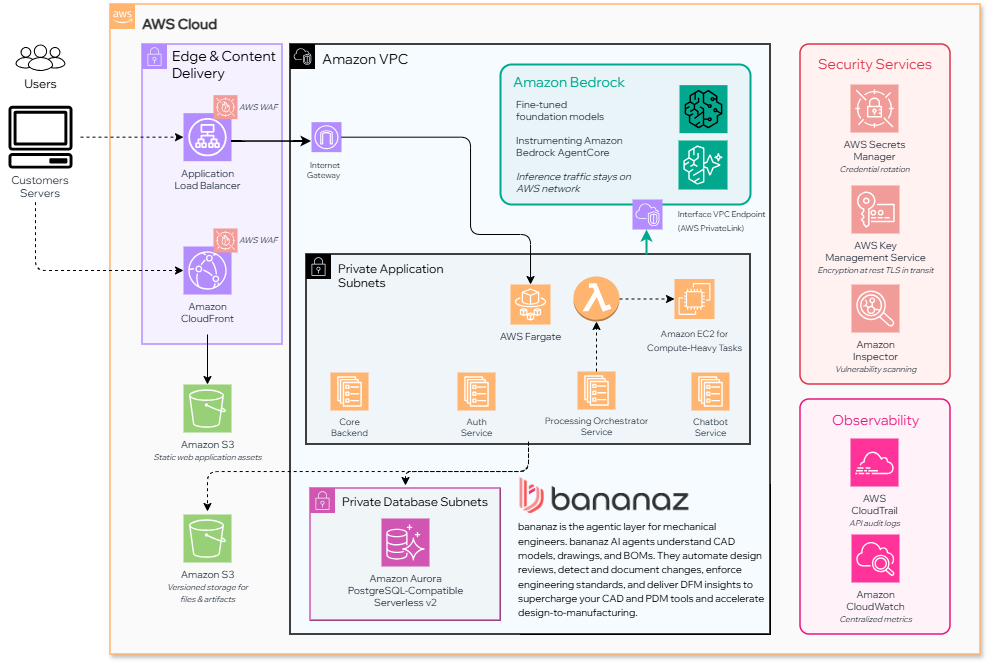
bananaz runs on Amazon Web Services to deliver a secure, reliable, and globally available platform for mechanical engineering teams. Protecting customer intellectual property is a core architectural requirement, implemented through strong identity controls, network segmentation, encryption, and detailed auditability.
The platform is deployed in a segmented Amazon VPC. Incoming traffic is served through Amazon CloudFront and an Application Load Balancer, both protected by AWS WAF, while core services run as isolated containers on AWS Fargate.
Application data is stored in Amazon Aurora PostgreSQL-Compatible Serverless v2, and Amazon S3 provides versioned storage for engineering files and platform artifacts. AWS Secrets Manager handles credential rotation, and all data is encrypted in transit (TLS) and at rest using AWS Key Management Service (KMS).
For generative AI capabilities, bananaz uses fine-tuned foundation models on Amazon Bedrock, accessed via VPC endpoints so inference traffic never leaves the AWS network. Bedrock gives the platform an important architectural advantage: model flexibility. Different engineering tasks have different requirements. A DFM check needs deterministic, rule-grounded reasoning. A tolerance stack-up analysis benefits from a math-capable model. A natural-language query about an assembly needs strong contextual understanding. Through Amazon Bedrock, bananaz orchestrates the right model for each agent and each task, and can swap or upgrade models as new ones become available, without changing the platform, retraining customers, or disrupting workflows. This is what makes bananaz a true agentic platform, not a single-model wrapper.
AWS CloudTrail, Amazon CloudWatch, and Amazon Inspector provide continuous visibility across the platform, from API-level audit logs to vulnerability scanning and centralized metrics.
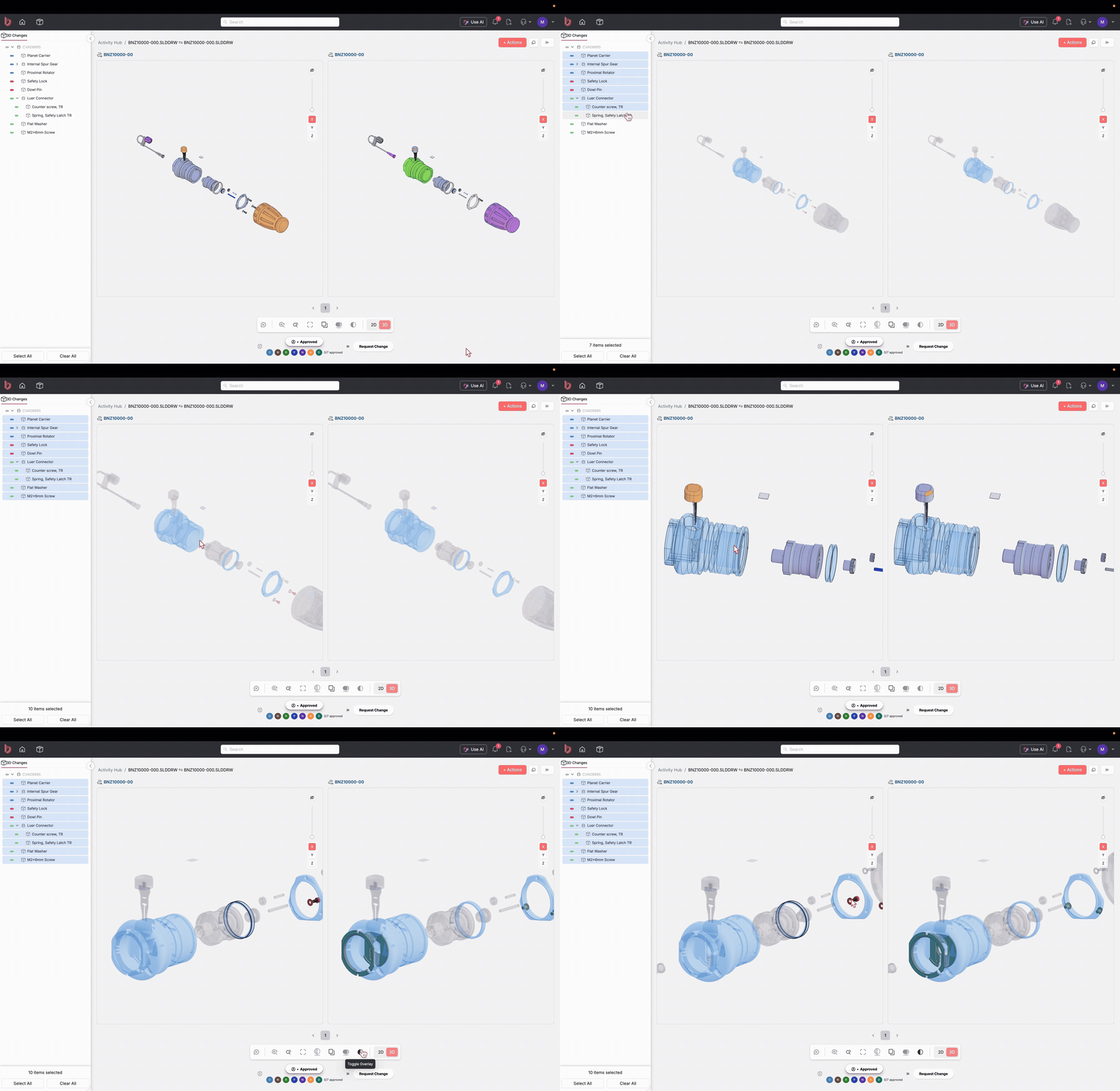
Case Study: Medical Device Company Cuts Drawing Review Time by Up to 80%
A medical device company, brought bananaz in to solve a problem that defines life inside a regulated medical-device environment: every drawing has to be right, every revision has to be checked, and the cost of missing something, a tolerance, a weld callout, a laser-marking dimension that won't fit on the part, shows up downstream as a supplier non-conformance, a CAPA, or a delayed product launch.
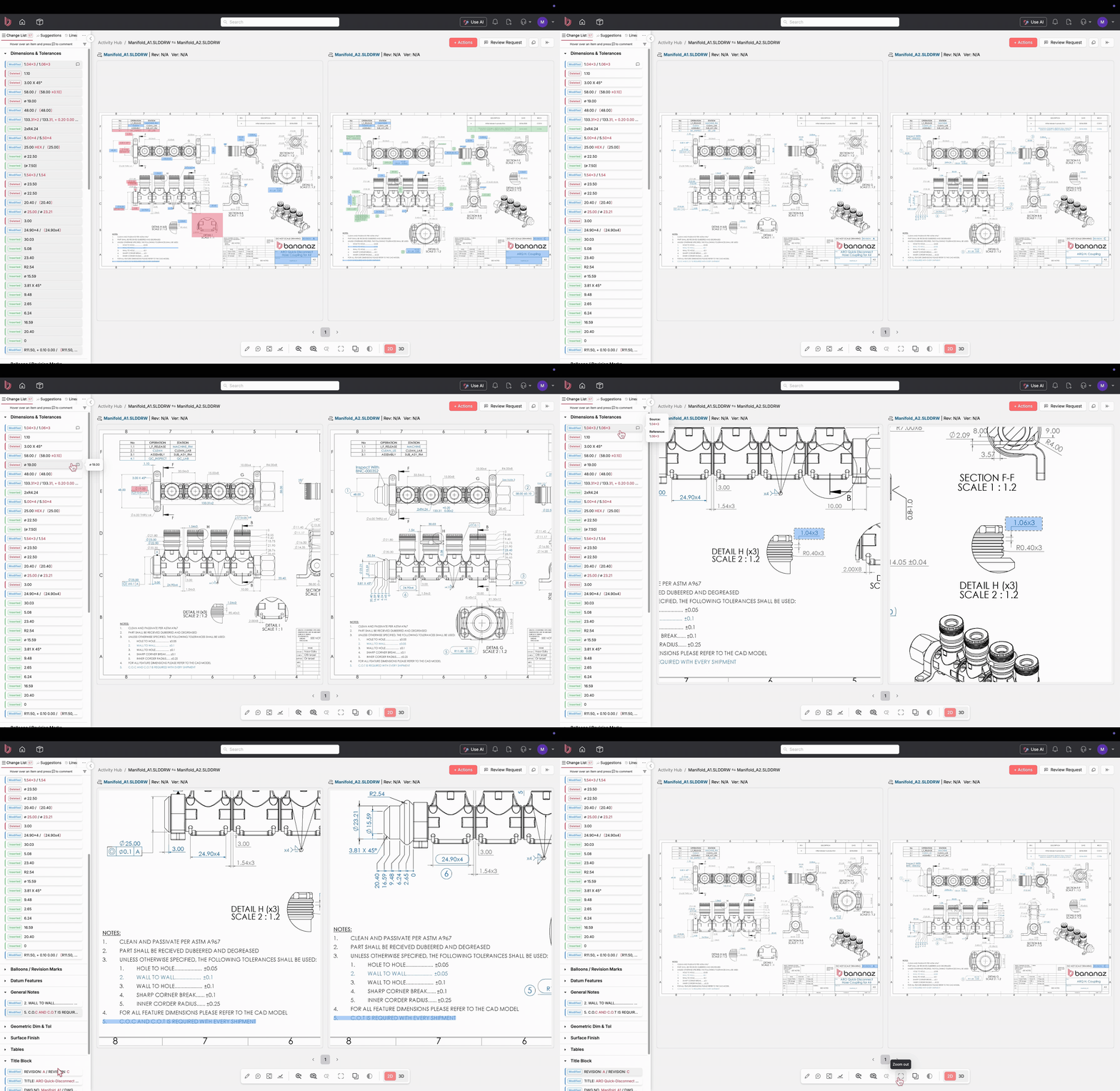
A senior drawing-quality engineer with decades of experience reviewing mechanical drawings, owns that gate. Before bananaz, her review process for a typical 15-to-20-sheet drawing took a full day: download the previous revision and the new revision from the PDM, open both as PDFs, and manually highlight every single dimension on every single sheet to confirm nothing had been changed, added, or removed by mistake. Most drawings cycled four or five times between her and the design engineers, because engineers couldn't always interpret her redline markups and would miss callouts on the next pass.
With bananaz deployed natively inside their CAD and PDM environment, the change is dramatic:
- Drawing review time per revision executed in 1 to 2 hours, down from a full day, a 75 to 80% reduction on the drawings where the senior engineer spends the bulk of her time. bananaz automatically highlights every difference between revisions, eliminating the need to manually compare dimensions sheet by sheet.
- Review iterations per drawing reduced from 4–5 to 2–3, because bananaz puts each issue front and center, allowing engineers to self-correct before pushing the revision back to her.
- Zero file shuffling across systems. Comments, redlines, and resolution status live in bananaz alongside the drawing, syncing automatically with the PDM.
- Standards and tribal knowledge codified. Decades of the engineer’s reviewer conventions, what makes a drawing manufacturable, which welds must be called out, what laser-marking dimensions a small part can carry, are captured as bananaz rules that the platform enforces automatically on every comparison.
- 300+ design comparisons executed in the first months on the platform, with bananaz now embedded in the daily workflow without changing the systems relied on for FDA-regulated documentation.
"I've definitely seen the time difference using bananaz," the senior engineer said. "Something that takes me most of the day to check, I can probably do in an hour to two hours, tops."
The result is expanded engineering capacity. A senior reviewer's time, the scarcest resource in any regulated engineering organization, is freed up by roughly two-thirds of the previous daily load, while the engineers around her ship better drawings on the first pass.
Take Aways
In mechanical engineering, the value of AI is determined by context. Generic tools fall short because they sit outside the systems where engineering work actually happens. bananaz was built to close that gap, running as an agentic layer natively integrated with the CAD, PDM, and PLM systems engineering teams already rely on, supercharging workflows rather than sitting alongside them.
Mechanical engineering teams use bananaz's AI-powered platform to accelerate product development, eliminate design errors, ensure compliance, and bring products to market faster. By embedding intelligent automation directly into existing workflows, bananaz supercharges engineering capabilities without disrupting proven processes.
Organizations adopting bananaz report dramatic improvements in development velocity, design quality, and team productivity. Engineers spend less time on tedious manual tasks and more time on meaningful innovation that drives business value. The platform delivers dual impact: clear ROI for organizations through reduced development time and manufacturing costs, and individual engineers empowered to focus on creative engineering and high-value decision-making.
To learn more about bananaz's solutions and see how AI can transform your mechanical engineering workflows, visit bananaz.ai or explore the AWS Marketplace listing.